Jewish Wedding Traditions You’ll Want To Know
Posted on
Jewish Wedding Traditions You’ll Want to Know
Jewish weddings are filled with meaningful traditions that connect couples to family, community, history, and faith. From the chuppah where the ceremony takes place to the breaking of the glass at the end of the ceremony, each tradition can bring its own symbolism and meaning to the celebration.
At IMPACT Collective, we believe that understanding the traditions that matter to our couples is an important part of thoughtful wedding planning. Jewish wedding customs can vary between families, communities, and denominations, so couples may choose to incorporate some traditions while creating their own personal interpretation of others.
Here are some of the Jewish wedding traditions and terms you may encounter while planning or attending a Jewish wedding.
1. The Chuppah
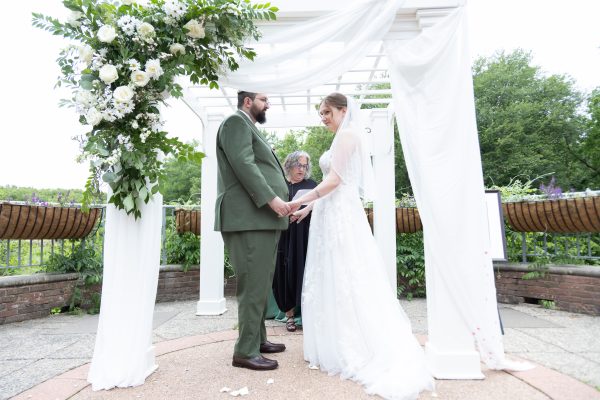
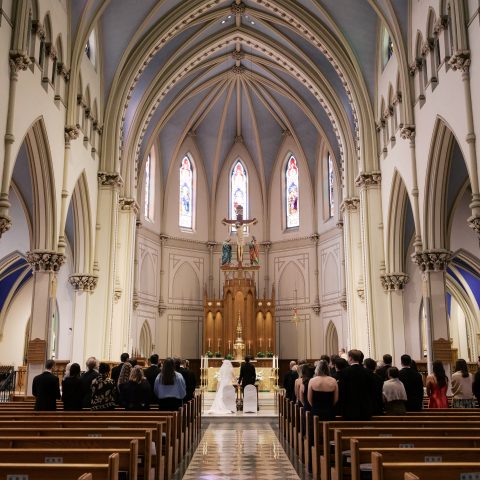
The chuppah is one of the most recognizable elements of a Jewish wedding ceremony. A chuppah is an open structure traditionally supported by four poles and covered by a cloth or other material. It symbolizes the home that the couple will build together. The couple, along with their rabbi and sometimes family members or other participants, may stand beneath the chuppah during the ceremony. The chuppah can also become an important part of the wedding’s overall design. Florals, fabrics, greenery, lighting, and other personal details can transform the structure into a beautiful focal point while preserving its symbolic meaning. For couples planning a Jewish wedding, the chuppah is often an opportunity to bring together tradition, symbolism, and personal style.
2. Signing the Ketubah
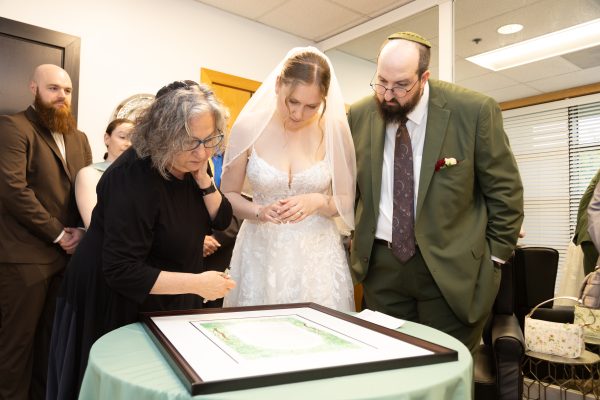
The ketubah is a Jewish marriage document that is traditionally signed before the wedding ceremony. Historically, the ketubah outlined the husband’s obligations toward his wife. Today, the way couples approach the ketubah can vary depending on their Jewish tradition, denomination, and personal beliefs. Many couples also choose a beautifully designed ketubah that becomes a meaningful keepsake from their wedding. The signing of the ketubah can take place as part of a private ceremony or gathering before the main wedding ceremony, giving close family and friends an opportunity to participate in this important moment.
3. Breaking the Glass
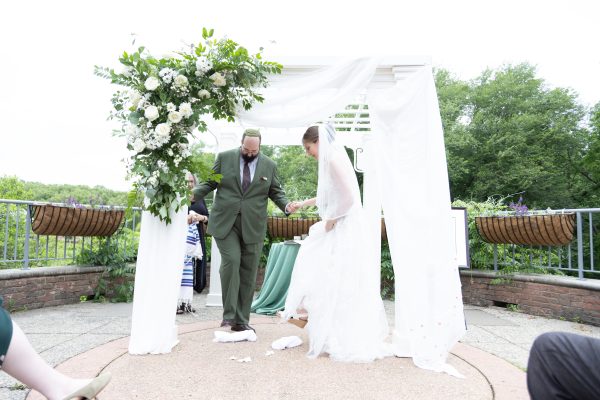
One of the most familiar Jewish wedding traditions is the breaking of the glass. Toward the end of the wedding ceremony, a glass is typically placed inside a cloth bag and broken by the groom, the bride, or both partners, depending on the couple’s tradition. The ritual has several interpretations. One traditional association connects the breaking of the glass to the destruction of the Temples in Jerusalem, serving as a reminder that even during moments of great joy, there are reasons to remember sorrow and loss. For many couples, the broken glass can also represent the lasting and transformative nature of marriage. And once the glass breaks, guests often respond with the familiar celebration:
“Mazel Tov!”
4. Mazel Tov and L’Chaim
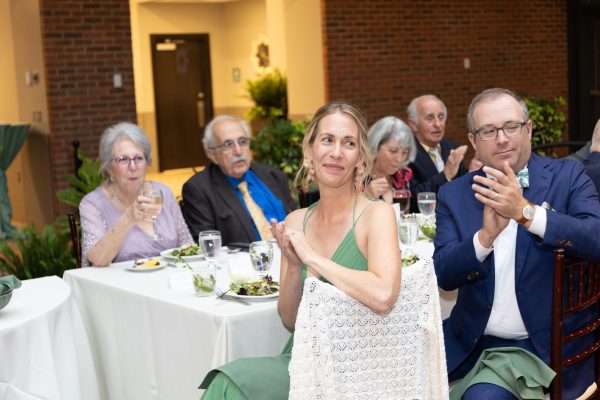
If you’ve attended a Jewish wedding, you’ve probably heard Mazel Tov. Mazel Tov is commonly used as an expression of congratulations and good wishes. At a wedding, it is a joyful way for guests to celebrate the newly married couple. Another expression you may hear is L’Chaim, which means “to life.” Unlike Mazel Tov, which is an expression of congratulations, L’Chaim is traditionally used as a toast. It is often heard at the reception when guests raise their glasses to celebrate the couple and their future together. So if you’re wondering about Mazel Tov vs. L’Chaim, an easy way to remember it is:
Mazel Tov = congratulations.
L’Chaim = to life, often used as a toast.
5. The Hora
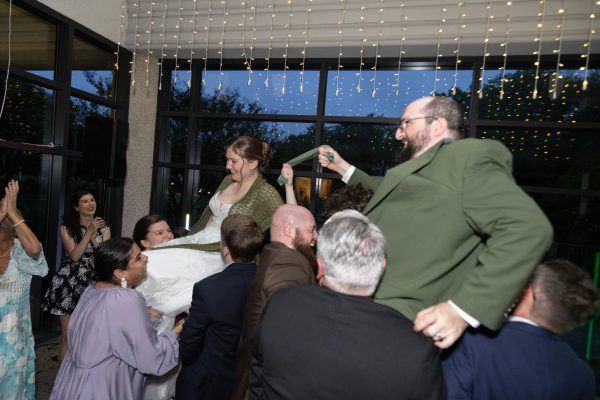
The hora is a lively circle dance that is often associated with Jewish wedding receptions. Guests join hands and dance together in a circle, creating an energetic and celebratory atmosphere. One of the most memorable moments may come when the newlyweds are lifted into the air on chairs while surrounded by their family and friends. The dance is often accompanied by traditional music, including Hava Nagila, although the exact music and style can vary. The hora isn’t simply entertainment. For many couples and families, it is a moment when everyone comes together to celebrate the newlyweds.
Jewish Wedding Toasts and Congratulations
If you’re attending a Jewish wedding and aren’t sure what to say, you don’t need to overthink it. “Mazel Tov!” is one of the most appropriate and recognizable ways to congratulate a Jewish couple. If you’re giving a toast, you may also hear or use “L’Chaim!”, meaning “to life.” A wedding toast can also simply be heartfelt and personal. Share a favorite memory, express your happiness for the couple, or wish them a lifetime of love and happiness. The most meaningful words are often the ones that come sincerely from the heart.
Creating a Jewish Wedding That Feels Personal
There is no single way to celebrate a Jewish wedding. Couples may incorporate traditions based on their family’s background, Jewish denomination, community, or personal beliefs. Some may include many traditional rituals, while others may choose only the customs that have particular meaning to them. The beauty of wedding planning is finding the balance between honoring tradition and creating something that feels uniquely yours. From the design of the chuppah to the ceremony itself, the reception, music, food, and guest experience, every element can tell part of your story.
Planning Your Jewish Wedding
Planning a Jewish wedding can involve coordinating religious traditions alongside the many logistical details that come with a wedding celebration. Depending on the couple’s plans, that may include coordinating multiple events, working with a rabbi or officiant, planning the ceremony timeline, incorporating cultural traditions, managing vendors, and creating a seamless experience for family and guests.
At IMPACT Collective, we work with couples from diverse cultural and religious backgrounds to create celebrations that honor the traditions that matter most to them.
Whether you’re planning a Jewish wedding in Washington, DC, Maryland, Northern Virginia, or a destination celebration, our team can help bring together the details while keeping your vision and traditions at the center. Contact IMPACT Collective to learn more about our wedding planning services.